Antique Yellowware Mixing Bowl Attributed to McCoy c1920s
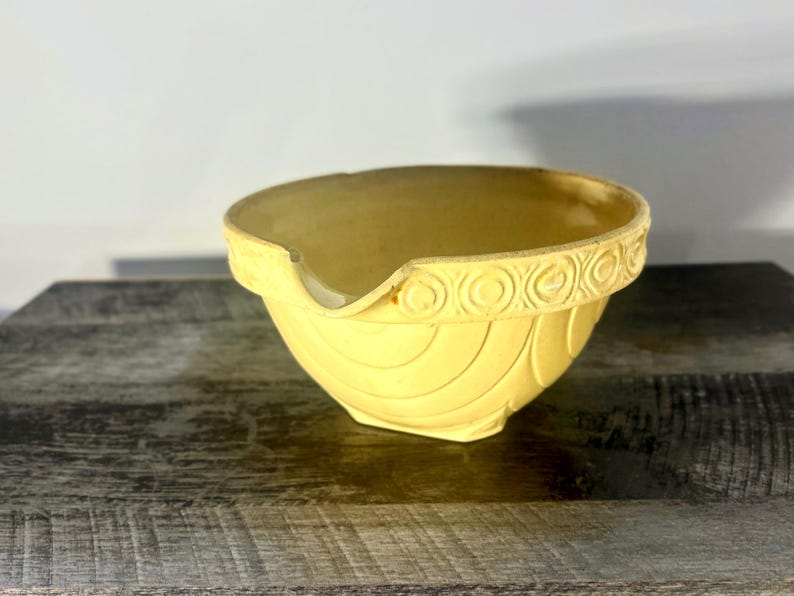
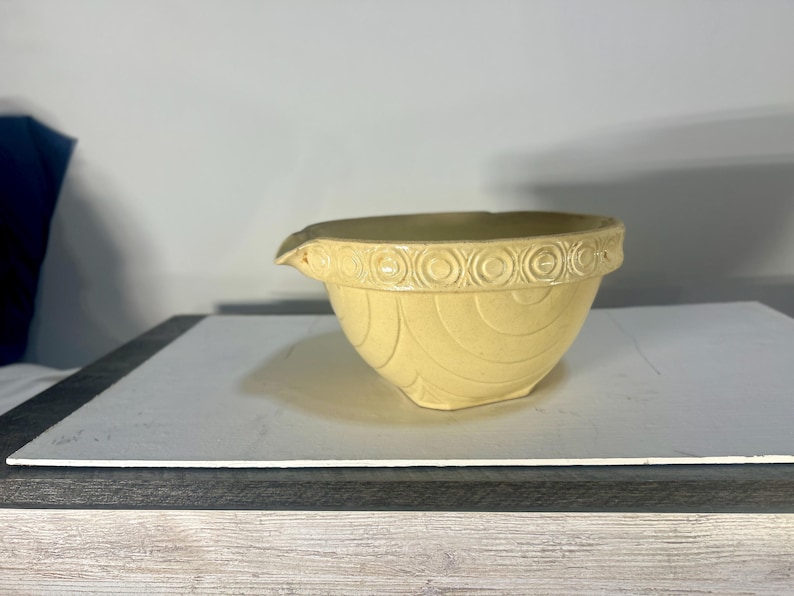
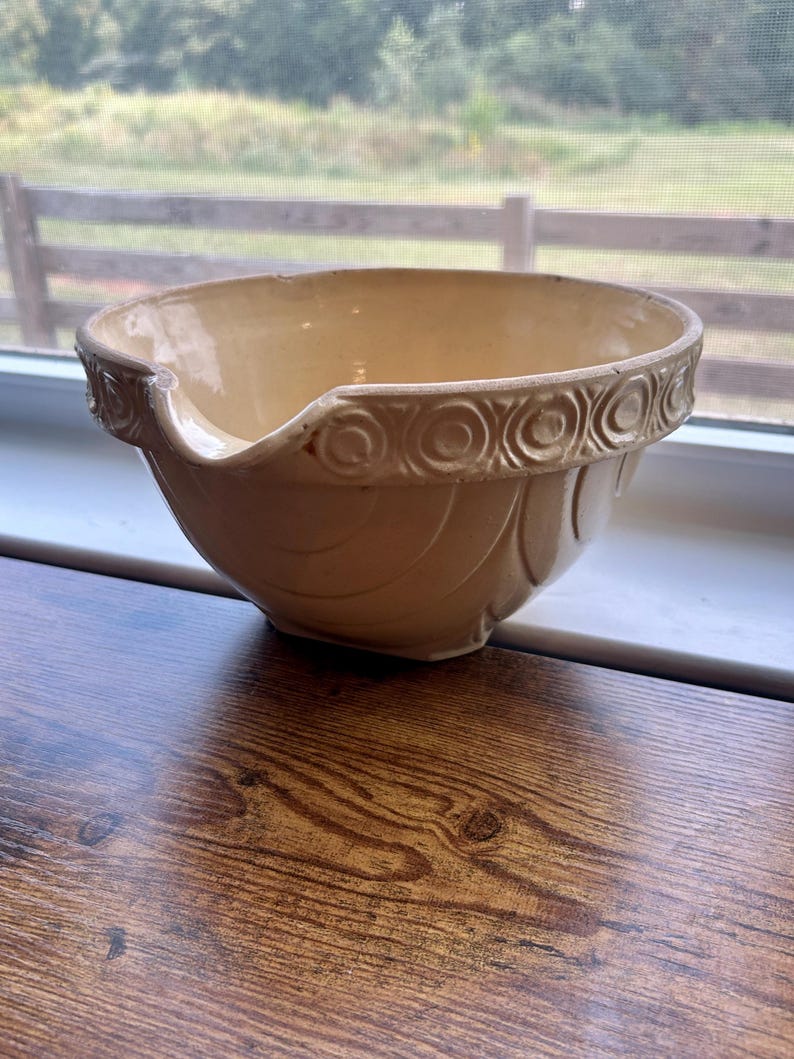
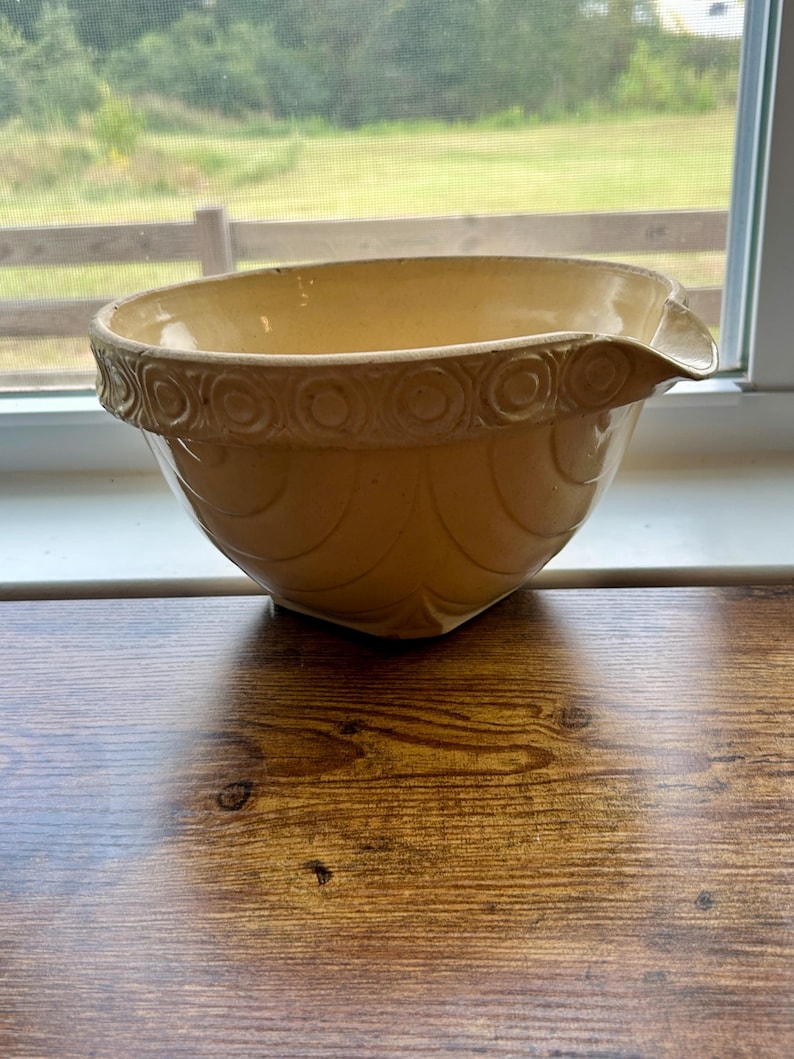
Antique yellowware batter bowl with an integrated pouring spout, attributed to early McCoy Pottery and dating to approximately 1910–1930. A raised band of concentric circles rings the rim, overlapping scalloped molding cascades down the…
Current stock, price and condition must be confirmed before purchase. This page is a catalog reference, not a stock reservation.
The details
Antique yellowware batter bowl with an integrated pouring spout, attributed to early McCoy Pottery and dating to approximately 1910–1930. A raised band of concentric circles rings the rim, overlapping scalloped molding cascades down the body, and the bowl stands on a distinctive squared pedestal foot. Approximately 10 inches across and 5 inches tall, unmarked, with honest age wear shown in the photographs. This is early American kitchen pottery at its most sculptural. The warm butter-yellow glaze settles softly over a molded surface that rewards a close look: a continuous band of raised concentric circles runs around the upper rim, and below it rows of overlapping scallops, often described as a fish-scale design, cascade toward the base. Rather than the plain round foot found on most mixing bowls, this one rests on a squared pedestal that gives it a crisp, architectural profile from the side. A single pouring spout is formed directly into the rim, making it a true batter bowl in form, and its substantial 10-inch proportions give it real presence on a shelf or counter. Molded yellowware like this was the everyday working pottery of the American kitchen through the nineteenth and early twentieth centuries, and Ohio's pottery towns were among its most productive sources. The McCoy family potteries of Roseville, Ohio, including the Nelson McCoy Sanitary Stoneware Company established in 1910, made utilitarian stoneware and kitchen forms in this era. This bowl is attributed to early McCoy on the strength of its form and molded decoration. It carries no maker's mark, and an exact catalog match for the pattern has not yet been established, so we present McCoy as a working attribution pending further specialist identification rather than a confirmed maker. For collectors of American yellowware and early Ohio kitchen pottery, the pairing of a decorated rim band, scalloped body, squared pedestal foot and integral spout gives this bowl far more visual interest than a plain banded mixing bowl. It displays beautifully on an open pantry shelf or in a hutch, and sits naturally alongside stoneware crocks and other early kitchen pieces in a farmhouse or collected home. It is offered as a collectible and display piece; as with any antique glazed earthenware, we do not recommend it for food preparation or serving. Condition: This bowl shows the wear of a genuinely old piece of kitchen pottery. There is visible wear along the rim edge, staining and discoloration in the glaze, including a lighter worn area at the center of the interior well, and scattered dark flecks. The underside shows glaze crazing. It is not offered as flawless or professionally authenticated. Please study every photograph closely, as they are the most complete record of its condition, and we are glad to answer questions before purchase. Collector specifications Form: Mixing / batter bowl with integrated pouring spout Material: Yellowware (glazed earthenware) Glaze color: Warm butter yellow Decoration: Raised concentric-circle band at the rim; overlapping scalloped (fish-scale) molding on the body Base: Squared pedestal foot Diameter: Approximately 10 inches Height: Approximately 5 inches Marks: Unmarked Attribution: Early McCoy Pottery (attributed; not confirmed by mark or catalog match) Estimated age: Early 20th century, approximately 1910–1930 Condition: Rim wear, glaze staining and discoloration, underside glaze crazing; see photographs
Source checked 2026-10-22. Reference listing ↗